
Pulleys and levers Levers:
They are three types (class 1 levers, 2 levers and 3 levers):
Class 1 levers: The fulcrum is located between the weight or resistance to overcome and the point where the froce is applied. Example: crowbar, see-saws, pliers, scissors , oar , etc.

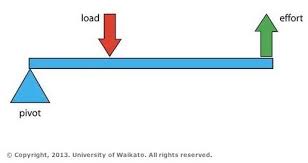
Class 2 levers: The fulcrum is at one end of the lever and the effort is at the other end. The resistance to overcome is located between the fulcrum and the effort. Examples: nutcrackers,wheelbarrows,paper punch, etc
Class 3 levers:The effort is located between the fulcrum and the resistance.Examples: tweezers,kitchen tongs ,staple removers,etc.
Pulleys can be: fixed or movable
Fixed pulleys: The axis of rotation of the pulley is fixed by attaching it to a support that prevents it from moving. With fixed pulleys, we still have to put in the same effort to lift the weight, but they make the task easier by changing the direction of the effort: when we lift weights without a pulley, we have to lift them up, whereas when we use a pulley, we make a downwards effort, which is easier.Examples: include pulleys to draw water up from a well, weightlifting equipment in a gym,etc

Moveable:Moveable pulleys move vertically as well as turning when we pull on the rope.These pulleys reduce the effort required to lift a load by half.Systems made up of moveable and fixed pulleys are called hoists.The force needed to lift a load in a hoist is reduced in proportion to the number of moveable pulleys in the system.Examples include system for lifting very heavy objects,like lifts.

 miguelysergio_tecnologia